
Denton County Is Growing Fast. Your Appraisal Might Be Growing Even Faster.
August 12, 2026
Key Takeaways
- Denton County property tax bills have increased for many owners because rapid population growth has pushed appraised values higher.
- Your tax bill is based on your property’s appraised value, exemptions, and the combined tax rates of several local taxing entities.
- Homestead, over-65, and disabled veteran exemptions can significantly reduce your taxable value.
- If your appraisal increased more than your property’s actual market value or is higher than similar nearby properties, you may have grounds for a Denton CAD protest.
- Harding & Carbone helps Denton County property owners challenge unfair appraisals every year.
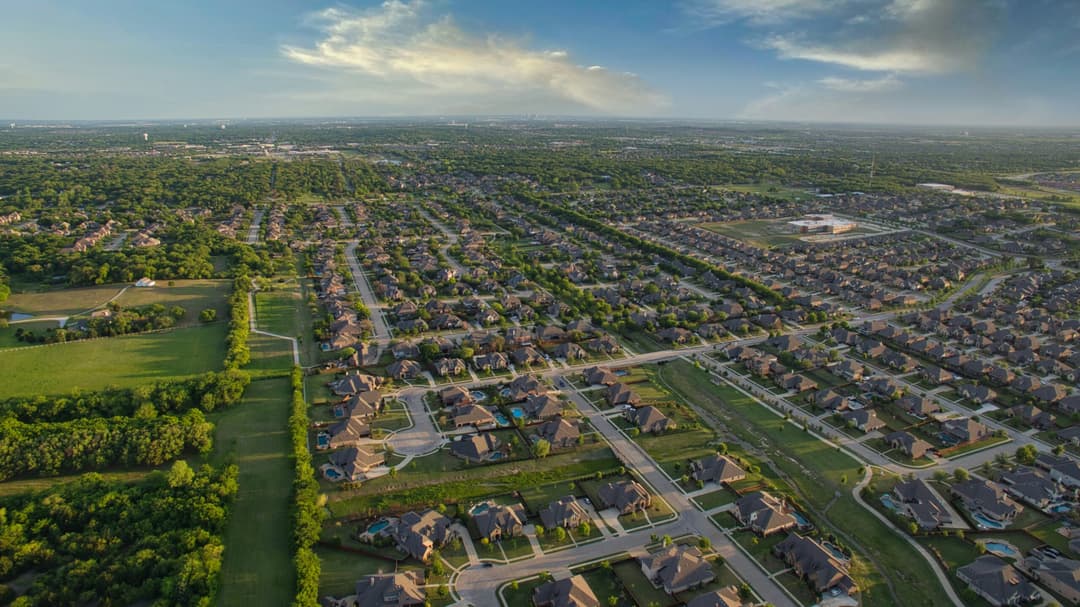
Denton County has become one of the fastest-growing counties in Texas. New neighborhoods continue to expand across communities like Flower Mound, Lewisville, Little Elm, Carrollton, and Denton, while businesses and employers continue attracting new residents from across the Dallas-Fort Worth metroplex.
Rapid growth is good for the local economy, but it has also created challenges for property owners. As home values climbed over the past several years, many owners opened their appraisal notices only to find values that seemed disconnected from what their homes would realistically sell for today.
Mass appraisal systems work by analyzing thousands of properties at once. While this approach allows appraisal districts to value an entire county, it can sometimes produce broad increases that don’t fully reflect the condition, location, or market activity of an individual property.
If your value increased simply because your neighborhood experienced rapid appreciation, it may be worth taking a closer look at your Denton County tax appraisal.
Why Denton County Appraisals Have Been Rising
Few Texas counties have experienced the level of growth Denton County has seen over the past decade.
Population growth, continued residential development, strong demand from buyers relocating to North Texas, and historically limited housing inventory all contributed to rapidly increasing home prices through much of the early 2020s.
To keep pace with changing market conditions, the Denton Central Appraisal District (DCAD) updates property values each year using mass appraisal techniques.
Rather than evaluating every home individually, mass appraisal relies on large datasets that include:
- Recent home sales
- Neighborhood sales trends
- Property characteristics
- Construction quality
- Lot size
- Square footage
- Age of the home
- Market modeling
This system works well for valuing hundreds of thousands of properties, but it also has limitations.
When Rapid Growth Creates Appraisal Challenges
During periods of significant market appreciation, appraisal models often place considerable weight on recent comparable sales.
That can create situations where:
- One unusually high sale influences an entire subdivision.
- Homes with deferred maintenance receive increases similar to fully renovated homes.
- Neighborhood-wide adjustments outpace actual market activity.
- Individual property characteristics receive less attention than broader market trends.
As markets begin to stabilize, these blanket increases don’t always reflect what buyers are currently willing to pay.
For homeowners, that creates an important question:
Does my appraisal reflect my property’s market value, or does it reflect the average increase across my neighborhood?
Answering that question is often the first step in determining whether filing a Denton CAD protest makes sense.
Why Similar Homes Can Have Different Values
Many homeowners assume that two nearly identical homes should receive nearly identical appraisals.
In reality, differences in condition, updates, lot location, deferred maintenance, and previous appeal results can all affect appraised values.
For example, one home may have:
- An updated kitchen
- A new roof
- Modern HVAC equipment
- Renovated bathrooms
While another similar home may still have its original finishes.
Mass appraisal models don’t always capture every difference with perfect accuracy.
Likewise, some homeowners successfully protest their appraisals each year while neighboring owners do not. Over time, those successful protests can create noticeable differences between comparable properties.
These inconsistencies often become the basis for an unequal appraisal argument, which we’ll discuss later in this guide.
How Your Denton County Property Tax Bill Is Built
One of the biggest misconceptions about Denton County property taxes is that the appraisal district determines how much tax you’ll pay.
In reality, DCAD determines your property’s taxable value. Multiple local taxing entities then apply their own tax rates to calculate your final bill.
Your property tax bill generally consists of taxes collected for several jurisdictions, including:
- Denton County
- Your city
- Your school district
- Community college districts (where applicable)
- Hospital districts (where applicable)
- Special utility or improvement districts
Each taxing authority adopts its own budget every year.
Those budgets determine each entity’s tax rate, which is then combined into the total property tax rate applied to your property.
If you’d like a more detailed explanation of this process, read our guide on how Texas property tax rates are set.
A Simplified Example
Although the exact rates vary depending on where your property is located, the calculation follows the same basic formula:
| Step | Description |
| Appraised Value | Determined by DCAD |
| Minus Exemptions | Homestead and other qualifying exemptions |
| Taxable Value | The amount subject to taxation |
| Combined Local Tax Rate | County + city + school district + special districts |
| Annual Property Tax Bill | Final amount owed |
This is why two homes with the same appraised value may still have different tax bills if they’re located in different cities or school districts.
For example, a homeowner in Flower Mound may pay a different combined rate than someone living in Lewisville or Little Elm, even if their homes have similar market values.
In the next section, we’ll break down the major taxing authorities that contribute to your Denton County property tax bill and explain why neighboring communities can have different effective tax rates.
How Local Taxing Authorities Affect Your Tax Bill
Your Denton County property tax bill is made up of several tax rates layered together. While the appraisal district determines your property’s appraised value, each taxing entity adopts its own tax rate based on its annual budget.
Most property owners pay taxes to some or all of the following:
- Denton County
- Their city or town
- Their local independent school district (ISD)
- Community college districts, where applicable
- Special districts, such as municipal utility districts (MUDs) or emergency services districts (ESDs)
Because these taxing entities differ by location, homeowners with similar homes can have noticeably different tax bills.
Why Tax Rates Vary Across Denton County
A home’s location determines which taxing jurisdictions apply. For example, homeowners in Flower Mound may belong to a different school district than homeowners in Denton or Little Elm, even if they’re only a few miles apart.
The school district is often the largest portion of a Texas property tax bill, followed by city and county taxes.
Here’s a simplified look at how the combined rate is built:
| Taxing Entity | Purpose |
| Denton County | County government services, courts, roads, public safety |
| City | Police, fire, parks, streets, local services |
| School District | Public education |
| Community College District | Higher education funding (where applicable) |
| Special Districts | Utilities, emergency services, infrastructure |
Depending on where your property is located, your combined tax rate may include different taxing authorities or additional special districts.
Note: Combined tax rates change annually and vary based on your property’s location. Even neighboring communities can have different overall rates because they fall within different school districts or special taxing districts.
Cities Throughout Denton County Have Different Combined Tax Rates
The exact rate you pay depends on where your property is located. Communities commonly served by Harding & Carbone include:
- Denton
- Flower Mound
- Lewisville
- Carrollton (Denton County portion)
- Little Elm
- Frisco (Denton County portion)
- The Colony
- Corinth
- Highland Village
While the combined rate varies from year to year, the calculation process remains the same:
Appraised Value → Exemptions → Taxable Value × Combined Local Tax Rate = Property Tax Bill
Understanding this formula helps explain why reducing your appraised value through a successful protest can lower your tax bill, even when local tax rates remain unchanged.
Property Tax Exemptions Available in Denton County
While you generally cannot control your local tax rates, you may qualify for exemptions that reduce your taxable value.
These exemptions can produce meaningful savings over time and are one of the easiest ways to reduce your annual Denton County property tax bill.
Homestead Exemption
If the property is your primary residence, you may qualify for the Texas Residence Homestead Exemption.
This exemption reduces the taxable value of your home for school district taxes and may also reduce taxes imposed by counties, cities, or other local taxing units that have adopted optional homestead exemptions.
For many homeowners, this is the first exemption they should apply for.
If you’re wondering how much you could save, read our guide on how much you can save with a Texas Homestead Exemption.
Filing Deadline
In most cases, homeowners should apply as soon as they qualify after purchasing their primary residence. While Texas law allows late applications in certain situations, filing promptly helps ensure you receive available tax savings as early as possible.
Over-65 Homestead Exemption
Homeowners age 65 or older may qualify for additional property tax relief.
One of the most valuable benefits is the school district tax ceiling, commonly referred to as a property tax freeze. Once established, your school district taxes generally cannot increase unless significant improvements are made to the property.
Additional local exemptions may also be available depending on the taxing entities serving your property.
Learn more about the over-65 property tax freeze and how it works in Texas.
Disabled Veteran Exemptions
Texas also offers valuable exemptions for qualifying disabled veterans.
The amount of the exemption depends on the veteran’s disability rating as determined by the U.S. Department of Veterans Affairs. Veterans with a 100% disability rating who meet eligibility requirements may qualify for a full exemption on their residence homestead.
You can learn more about the disabled veteran property tax exemption, including eligibility requirements and application forms.
Keep Your Exemptions Current
If you’ve recently purchased a home, turned 65, or become eligible for a veteran’s exemption, review your property records to make sure all available exemptions have been applied.
Missing an exemption could mean paying more in Denton County property tax than necessary.
How to Protest Your Denton County Tax Appraisal
If you believe your appraisal is too high, Texas law gives you the right to protest it.
Many successful protests begin with homeowners simply reviewing their appraisal notice and comparing it with recent sales, neighborhood assessments, and their property’s actual condition.
Step 1: Review Your Appraisal Notice
Start by reviewing:
- Appraised value
- Property characteristics
- Square footage
- Lot size
- Improvements
- Exemptions currently applied
Even small errors can affect your property’s value.
Step 2: File Your Protest
Most property owners can file a Denton CAD protest either:
- Online through the DCAD property owner portal
- By mailing the required protest form
In most years, the deadline is May 15 or 30 days after your notice was mailed, whichever is later.
Because deadlines are strict, it’s important to file on time. Our guide to the Texas property tax protest deadline explains how these filing windows work and why missing them could delay your opportunity to appeal.
Step 3: Gather Supporting Evidence
Strong evidence gives your protest the best chance of success.
Helpful documentation may include:
- Recent comparable sales
- Photos showing deferred maintenance
- Repair estimates
- Independent appraisals
- Assessment comparisons with similar homes
If you’re unsure which information is most persuasive, our guide to evidence for your property tax protest explains the types of documentation commonly used in Texas property tax appeals.
Step 4: Informal Meeting
Many Denton County protests begin with an informal discussion between the property owner (or their representative) and a DCAD appraiser.
During this meeting, both sides review the available evidence and discuss whether an adjustment is appropriate.
Some protests are resolved during this stage without moving further.
Step 5: Appraisal Review Board (ARB) Hearing
If an agreement isn’t reached during the informal review, your case may proceed to an Appraisal Review Board hearing.
The ARB is an independent panel that reviews evidence from both parties before making a decision.
Property owners may represent themselves or authorize a property tax consultant or attorney to appear on their behalf.
The Unequal Appraisal Argument: One of the Strongest Reasons to Protest
Many property owners assume the only reason to file a property tax protest is that they believe their home wouldn’t sell for the appraised value.
While market value is one basis for an appeal, it’s not the only one.
Texas law also allows property owners to argue that their property has been unequally appraised compared to similar properties. In fast-growing counties like Denton, this can be one of the strongest grounds for a protest.
What Is an Unequal Appraisal?
An unequal appraisal occurs when your property is assessed at a higher value than comparable properties, even though they are similar in size, age, condition, location, and features.
This often happens because mass appraisal models rely on broad market trends rather than evaluating every home individually.
For example, imagine two homes in the same subdivision that were built by the same builder, have similar square footage, and sit on comparable lots.
If one home is appraised at significantly more than the other without a clear reason, the higher-valued property may have grounds for an unequal appraisal protest.
Why Blanket Increases Can Create Appeal Opportunities
During periods of rapid growth, appraisal districts often apply neighborhood-wide adjustments based on market data.
While these adjustments help value hundreds of thousands of properties, they don’t always account for differences between individual homes.
Examples include:
- Deferred maintenance
- Original kitchens or bathrooms
- Foundation concerns
- Older roofs or HVAC systems
- Functional obsolescence
- Backing up to busy roads or commercial properties
- Smaller lots or less desirable locations within the neighborhood
When these differences aren’t fully reflected, homeowners can end up with appraisals that don’t accurately represent their property’s value.
In many cases, this creates an opportunity to challenge the appraisal based on unequal treatment rather than market value alone.
If you’d like to learn more about this strategy, our guide on unequal appraisal protests explains how Texas homeowners use comparable properties to support an appeal.
What Makes a Strong Unequal Appraisal Case?
Every property is different, but successful protests often include evidence such as:
- Comparable homes with lower appraised values
- Differences in condition between properties
- Recent sales that don’t support the appraised value
- Photos documenting deferred maintenance
- Repair estimates
- Independent market analysis
Rather than focusing on a single unusually low neighboring property, it’s often more effective to compare several similar homes to identify consistent appraisal differences.
Because Denton County continues to experience rapid development and changing market conditions, reviewing comparable properties each year can help determine whether your appraisal remains fair.
Frequently Asked Questions
Why has my Denton County appraisal increased so much?
Denton County has experienced significant population growth and strong housing demand over the past several years. DCAD uses mass appraisal models to update property values based on market data, which can result in noticeable increases during periods of rapid appreciation.
Does a higher appraisal automatically mean my taxes will increase?
Not necessarily.
Your property tax bill depends on several factors, including your appraised value, available exemptions, and the combined tax rates established by your local taxing entities. Changes to any of these factors can affect your final bill.
When is the deadline to file a Denton CAD protest?
In most years, property owners must file a protest by May 15 or 30 days after their appraisal notice is mailed, whichever is later. Filing before the deadline preserves your right to challenge your appraisal.
Can I protest if my home hasn’t been sold?
Yes.
Property owners do not need to sell their home to challenge its appraised value. Appraisals are based on estimated market value, and supporting evidence such as comparable sales, property condition, and unequal appraisal may support a protest.
Do I need an attorney or a property tax consultant?
You may represent yourself during the protest process.
However, many homeowners choose professional representation because experienced property tax professionals understand appraisal methodology, protest strategies, comparable sales analysis, and local procedures.
Harding & Carbone Represents Denton County Property Owners
Whether you own a home in Denton, Flower Mound, Lewisville, Carrollton, Little Elm, Frisco, or another Denton County community, reviewing your appraisal each year is one of the best ways to ensure you’re paying only your fair share of property taxes.
At Harding & Carbone, property tax appeals are our sole focus. Our team reviews each property’s valuation, analyzes comparable properties, and develops evidence-based protest strategies designed to pursue the lowest lawful assessment.
Learn more about Harding & Carbone’s residential appeal service to see how we help Texas homeowners challenge unfair property tax assessments year after year.
If you’ve recently received your appraisal notice and believe your value doesn’t reflect today’s market or compares unfavorably with similar homes, talk to a Denton County property tax consultant. We’re here to answer your questions, explain your options, and help you handle the protest process.
Get Help With Your Denton County Property Tax Appeal
Denton County’s rapid growth has transformed communities across North Texas, but it has also made property appraisals more challenging. As neighborhoods grow and market conditions shift, mass appraisal models don’t always capture the unique characteristics of every property.
Understanding how your Denton County property tax bill is calculated, taking advantage of available exemptions, and reviewing your appraisal carefully each year can help make sure you’re not paying more than you should.
If your appraisal increased significantly or appears higher than comparable properties in your neighborhood, it may be worth exploring your protest options. A well-supported Denton CAD protest can lead to a lower assessed value and meaningful property tax savings.
Table of Contents
How Your Denton County Property Tax Bill Is BuiltProperty Tax Exemptions Available in Denton CountyHow to Protest Your Denton County Tax AppraisalThe Unequal Appraisal Argument: One of the Strongest Reasons to ProtestFrequently Asked QuestionsHarding & Carbone Represents Denton County Property OwnersGet Help With Your Denton County Property Tax AppealMost Recent Blogs
September 22, 2026

Denton County Appraisal District: How To Lower Your North Texas Property Tax Bill
Harding and Carbone explains how the Denton County Appraisal District calculates home values and what North Texas owners can do to lower their tax bill.
September 21, 2026

Collin County Appraisal District: A Property Tax Protest Guide For Texas Homeowners
Harding and Carbone explains the Collin County Appraisal District process, valuations, and appeal deadlines to help homeowners protect their investment.
September 20, 2026

Travis County Property Taxes Explained: Rates, Exemptions, And How To Appeal
Harding and Carbone breaks down Travis County property tax rates, exemptions, and the appeal process to help homeowners understand their annual tax bill.
September 19, 2026

Ector County Appraisal District: Your Guide To Reducing Property Taxes In The Permian Basin
Harding and Carbone breaks down Travis County property tax rates, exemptions, and the appeal process to help homeowners understand their annual tax bill.
September 18, 2026

Denton County Property Tax Guide: What North Texas Homeowners Need To Know
Harding and Carbone breaks down Denton County property tax rates, appraisal values, and the appeal process so homeowners know what to expect each year.
September 15, 2026

Hidalgo County Property Tax Guide For McAllen And Rio Grande Valley Homeowners
Harding and Carbone explains how Hidalgo County property tax rates, appraisals, and appeal deadlines affect McAllen and Rio Grande Valley area homeowners.